
A Firm Foundation: Justin's Story
A Firm Foundation: Justin's Story
By Nonjabulo Mlangeni
In the latest blog on our website, we profile Justin Davis, who walks us through his path to fatherhood, faith, and fulfillment. A must-read for men with XXY who are coming to terms with their own fertility journey.
A Fragile Start
Justin Davis was a fragile child. When I ask how he'd describe himself back then, he says "sensitive." Emotional too. He seemed to feel everything, but what he felt most was fear.
"I was afraid of a lot of things," he says. "Going to school caused anxiety. So much so that, in kindergarten, I sat on my teacher's lap every day for nap time ... in first grade, when my mom dropped me off, I remember screaming and running after her."
By the time he reached high school, he was caught in a cycle. "I missed the first week of every year because I was too afraid to go; I'd say, 'no, [I can't] ... I'm sorry.'"
It's not like he didn't have his reasons. He knew he wasn't like the other boys. He didn't dress or act like them. He was never very athletic, never rough or aggressive. They didn't even have the same interests.
Justin was what 80s or 90s kids would call metrosexual. A pop culture term for men who value aesthetics the way that women typically do. He was interested in fashion, impeccably groomed, and people used that to draw conclusions about his sexuality.
"The other boys were rugged, and I was none of that," he says. "I'd dress really nice and fix my hair. There were several people who, just when they met me, thought I was gay."
It happened so much that he started to wonder if it was true. Being extremely close to his mother, he was comfortable going to her. "At fifteen, I had a whole [moment] where I said, 'Mom, why am I so different? Is it this?' And we had a gay family member that came over, sat and talked with me. He asked why I thought this or that, and it turned out that I wasn't."
In truth, Justin was just a bullied kid responding how bullied kids do. People were projecting various labels onto him, and he'd started to internalize them. Maybe he was an outcast. Maybe he was a weirdo. Maybe he didn't belong. Indeed, the power of the bully has always been their knack for making you see yourself as they do.
A Turning Point
There are seasons in our lives when everything aligns, and life changes so fast that it seems supernatural. Around the ninth grade, Justin had a growth spurt. He shot up like bamboo—maxing out at 6'1". He also grew into his features. Suddenly considered tall, dark and handsome, he went from outcast to hot topic.
At the same time, some of his peers experienced their own growth, though theirs was internal. As classmates matured, they began to see and value him for who he was; his confidence soared. "Once girls started to notice me, they also started liking me for me. For being the nice guy and not the macho one."
He reached a point where people's labels didn't matter like they used to. "I didn't know I was medically different [back then]," says Justin. "I just thought I was me. I liked women, but I also liked pretty things. Whatever. Who cares?"
Coming of Age
Though Justin did well academically, he finished high school with no sense of direction. At 18, he joined the Air Force, which added structure to his life. It also gave him a sense of belonging.
"I was still the sensitive kid in the military," he remembers. "But I had several other airmen that were rough and tough guys, who I got along with really well. They took me under their wing and didn't care that I was different."
In that season, he met the man who remains his best friend to this day and formed several lifelong bonds with others that served. Although he was socially fulfilled, the work was hard on his body. Looking back, he's convinced that he should have chosen a different role.
"I'd taken flying lessons as a teenager, which was one of the things that drew me to the Air Force," he says. "So I walked into the recruiter's office and said, 'I want to fly planes,' but learned I'd need a degree for that. I said 'well, put me as close to the cockpit as you can get me."
He made that request without knowing exactly what it would look like. It looked like 18-hour days as a crew chief, facing all kinds of elements; scorched by the sun and doused in the rain. There was also a lot of stress during deployment, where the stakes were high and a plane malfunction could easily cost lives.
Testosterone and Trauma
In retrospect, Justin sees how some of the challenges from that period of his life point to Klinefelter Syndrome. Physical fitness was a major problem. He'd found it hard to meet the requirements to join the military in the first place. Once he got in, he was okay for a while, because his job didn't require frequent testing. He went a few years before another assessment rolled around, and when it did, he failed.
"I didn't know this at that time, but [XXY] was the reason. I went to the gym every day for an entire year and never built any upper body strength. I couldn't pass my push-ups for nothing."
Justin went to the doctor, who found he had low testosterone. "He said, 'oh, this is exciting. I've never treated anyone for this,'" Justin recalls. In all the doctor's excitement, he prescribed an outrageously high dosage that seemed to set Justin's life on fire.
"He put me on 5% TRT daily. I was rubbing it into my skin with EndoGel for 6 months and it hurt a lot because it was way, way, way too much."
The side effects didn't stop there. Justin developed a serious anger problem, to the point that a superior approached him with an ultimatum. "I had my Flight Chief come and say, 'if you don't get off the TRT, you can get out of the Air Force' ... my ability to control my emotions was gone."
So he wound up in the strange position of knowing his hormones were off, without knowing why. Even worse, his efforts to treat it had brought minimal benefit. A few strength gains, a little body hair, a pinch of trauma.
That, plus the struggle to pass his physical fitness tests (PT), made Justin opt to leave the military after 7 years. At only 25, it seemed so premature. "I wanted to do 20 years, but I'd already tried so many things to pass my PT and couldn't do it, so I left with an honorable discharge."
Klinefelter's Diagnosis
Justin learned he was infertile during his time in the military, but it was only after leaving that he discovered the cause. At 26, his then-wife encouraged him to get to the root of the issue. "I had ultrasounds, and they weren't able to find anything that way," he recalls. "Then I did a DNA test, and the doctors came back with 'well, you've got one too many chromosomes."
Though his wife wanted children, the options looked increasingly slim. "They said, 'if you wanted to have kids, you should have saved your sperm when you were 16.'" Undeterred, his spouse did independent research, which led her to the microTESE procedure. She brought that option to Justin, but it sounded too extreme.
Though they passed on that option, her research improved the couple's overall understanding of the condition. As many people with XXY do, Justin had an epiphany when he heard the symptoms. "She went down the list and named each one. I said, 'my goodness ... 9 out of 10 of those is me.'"
Becoming a Dad
Justin had already grieved his infertility long before he discovered the cause. Though it was hard to do, he'd made peace with the idea that he wouldn't be a father. To him, reopening that door meant returning to a place where he'd been hurt before.
He'd wanted something, lost it, then buried the hope that it could ever be his. Now he was being asked to dig it out of the dirt and try all over again. The idea alone was triggering. But, on the other hand, his wife was unwilling to stay married if they didn't keep trying. Whichever path he chose, there would probably be pain.
"It was an emotional battle for me," Justin recalls. "There were tears. When I thought of raising a kid that didn't look like me ... I had a hard time with that."
Then his wife did a remarkable thing. "She said, 'because that part bothers you so much, let's do an embryo adoption. That way they won't look like either of us."
And so they did. The couple paid the incredible expense to adopt two embryos. Because the children would have been African American, most people would just assume they were adopted.
"I wouldn't have to deal with questions like 'why don't they look like you?' Which I was so worried about."
Today, he thinks he made a mountain out of a molehill. "Given the chance to do it over, I wouldn't care if [a kid] looked like me," he says. "But I was younger then."
Unfortunately, the couple lost the embryos at seven weeks, and they were shattered. The marriage itself was starting to fall apart. Still, his wife wanted to try again a year later, this time with a sperm donor. Justin was against this too, though he's since changed his mind.
"Looking back, I just want to punch my old self in the face [for it]. But at the time, the thought [of the procedure] made me very uncomfortable."
While his wife was being inseminated, he remembers "bawling like a child." He also couldn't wrap his mind around it once it was over, which created more tension. "I was kind of mean," he says, reflectively. "I was really resentful."
Though Justin remained torn throughout the pregnancy, he started to imagine what he'd be like as a father. He wanted a girl—believing he wouldn't be a good "boy dad" because he doesn't do the typical things.
"I don't like to hunt. I don't like to fish. I don't like to go fast," says Justin. "I thought I'd be a better girl dad because I'd love taking her to build a bear and princess tea parties." Today, he realizes he would've been just as good a father to either, because he has the heart for it.
It's not uncommon for people who take alternative paths to parenthood to wonder if they'll have that primal connection to their child. Indeed, some women who take the surrogacy route note the same concern. At the start, Justin did have trouble connecting with his daughter. And then one day, he didn't.
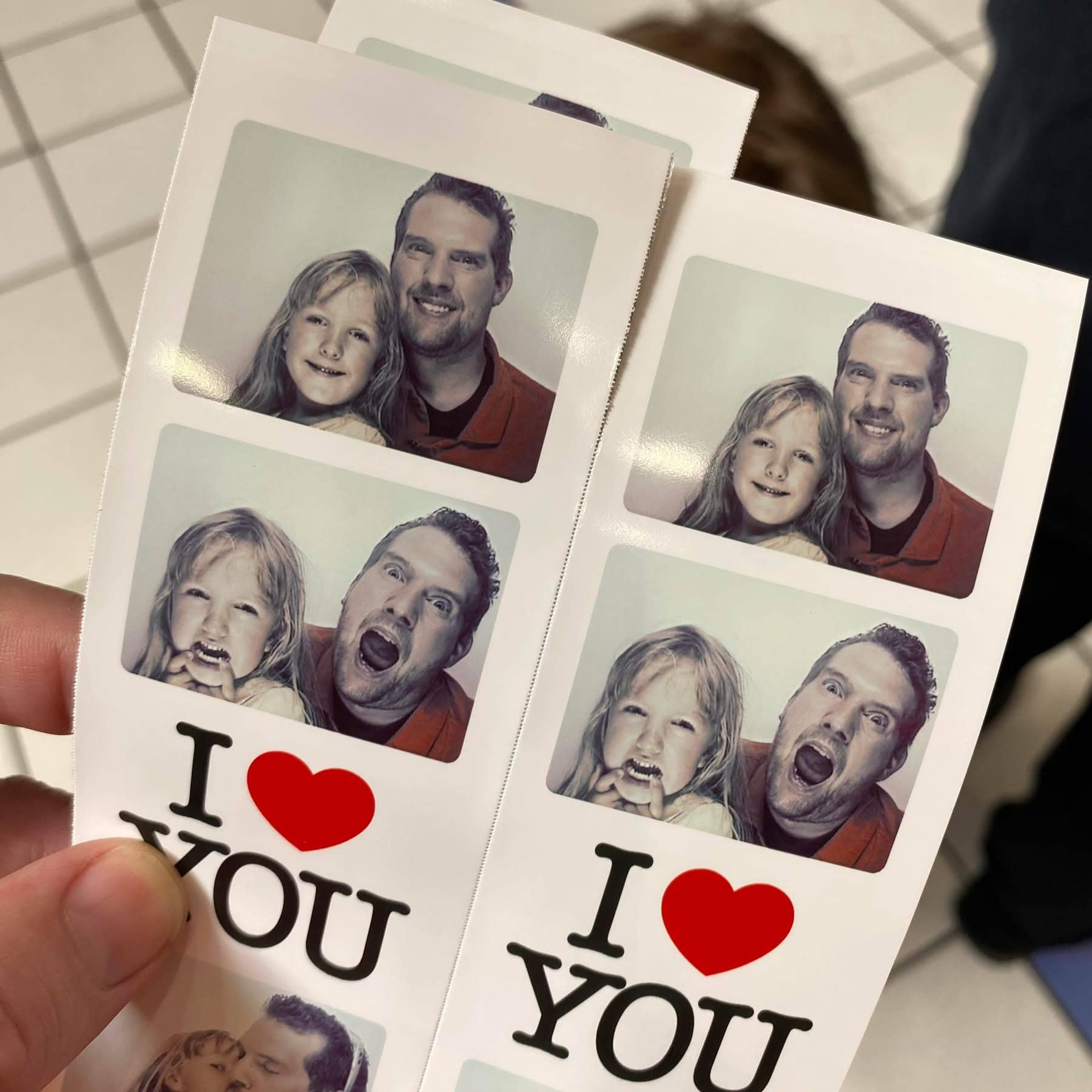
"I was just sitting on the couch, holding her," he remembers. "She was looking at me, I was looking at her. And I just thought, 'I would kill anyone in the world for you' ... She's my baby girl. And the crazy thing is she looks more like me than she does her mom."
Something Bigger
Today, Justin's on a much more reasonable regimen. He takes 2 mg of testosterone every two weeks. He's only been taking it for 3 years, since the incident in his twenties made him wary to try again.
But many of the things that once scared him just don't anymore. And many things that seemed colossal look minor now that he's rooted in something bigger.
Some years ago, he had a life-changing experience. He was standing in the shower, when he heard a voice saying, "this is the last time I'm going to call you."
"That was Saturday night," he says. "Sunday morning, I went to a church I'd never been to before, and introduced myself to people. Later, the pastor said, 'I don't know why, but God is telling me to get Justin Davis up here to share his testimony."
So Justin did. Those events, and some that followed, laid the foundation for faith that's saved him a hundred times over. And he certainly needed to be saved. One night he was home alone, depressed by his divorce and feeling suicidal. Right then, his best friend felt led to call him. Something bigger helped Justin stay alive.
And though life hasn't been perfect since, the truth is that it never was. Not for him, not for anybody. But today's man is a far cry from his fragile start. He has resilience that he can't take credit for. He's also more level-headed. More humble. More hopeful than he's ever been.
"And I wouldn't have any of it if it wasn't for Christ."