
Home, At Last: Matt's Story
Home, At Last: Matt's Story
By Nonjabulo Mlangeni
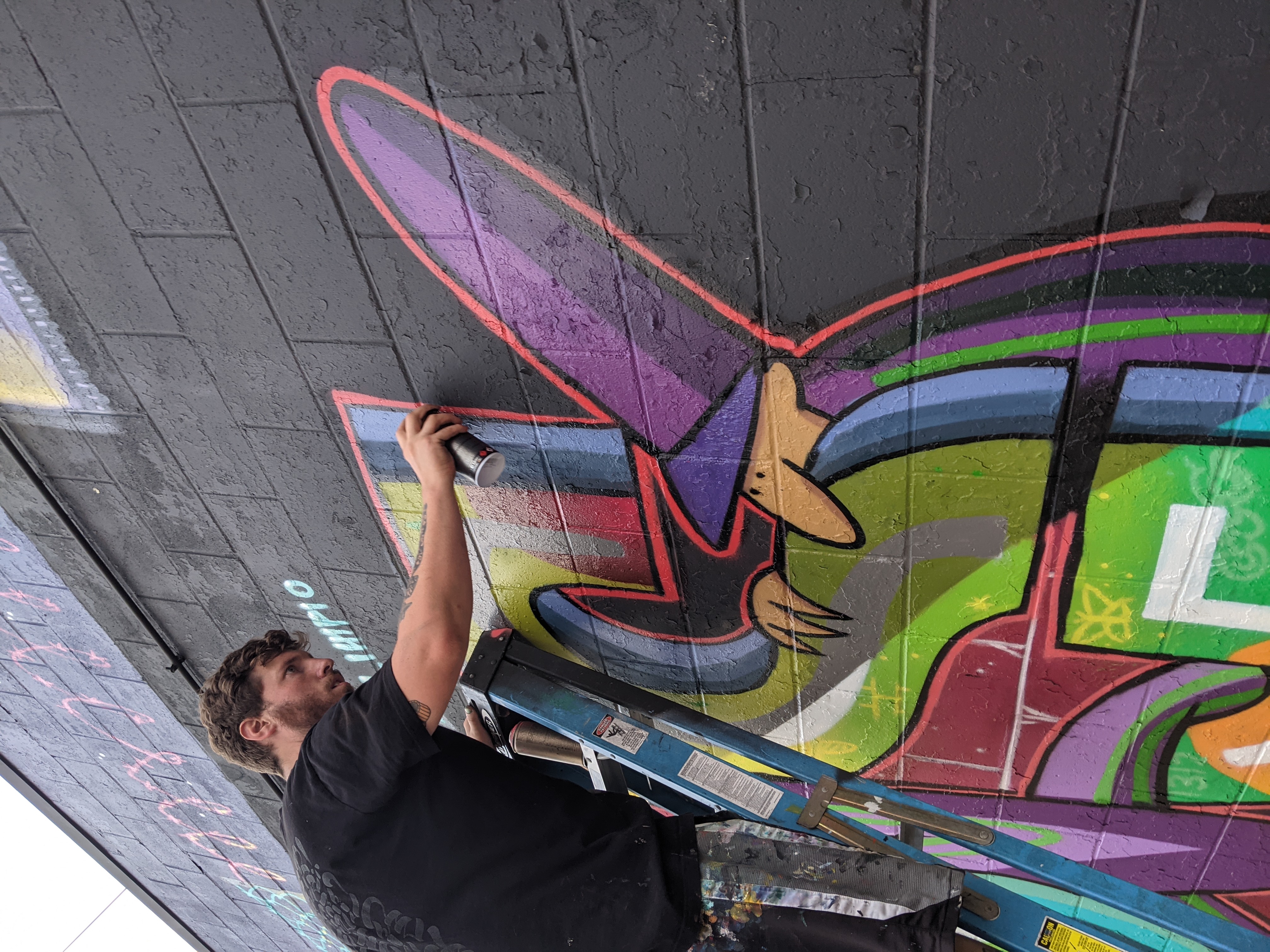
In our latest blog, we profile Matt Limpio: an artist, globetrotter and humanitarian. After a decades-long search for self-love and belonging, the life he lives today is well worth it all. Head to our website to read this inspiring story about art, self-discovery, and what happens when you wait to get to the good part.
I once heard someone say that life is about waiting to get to the good part. In Matt's case, this is more than true. His story is the kind that ends so much better than it started.
It started with a desire to belong. As a kid, he found it hard to connect with other children. The fact that his family moved around so much didn't help. He was often the newbie in school, struggling to figure out where he fit in.
Looking back, he thinks the isolation was connected to the lack of testosterone. "I was more social before puberty hit," he says. "And that's when people start getting more testosterone, so [me] not having that may be part of the reason for me not moving forward [socially]."
In the classroom, learning challenges enhanced his sense of separation. Being dyslexic, he was self-conscious about not performing on the same level as his peers. Some teachers mishandled that difference, which just gave him more reason to shrink back.
"When you're a kid who can't read as well as the others or doesn't understand concepts in the same way, you feel shy. I also had some mean teachers growing up ... You [become] shy [as a result of] being told you're wrong or told you're stupid."
Finding His Voice
Matt started to wrestle with thoughts of comparison, wondering why he wasn't socially or academically on par with his peers. But there was one area where he exceeded them all. Like many introverted people, Matt had a vivid inner world that he often retreated into. All that time alone birthed skills and talents that would ultimately help save his life.
"I did every kind of art," he says. "I really got into graffiti. That's a medium that outsiders are drawn to [because] you make your own rules. So you meet many people who've also gone through hard situations and found this medium that's not about the money ... It's just a bunch of [damaged] kids doing art."
But it wasn't just an outlet; it was pure, raw talent. As a freshman and sophomore, he took advanced art classes with juniors and seniors. Discovering his purpose had an anchoring effect. It grounded his life, and gave him something to take pride in.
"It helped me find a voice for myself," he recalls. "It was the one thing I excelled at. From an early age, I knew I was good."
And rightly so. For many people who are constantly reminded of what they can't do or the standards they don't meet, discovering a talent or strength makes all the difference in the world. Parents to boys with XXY can use the same formula to help strengthen their kids' resilience and build their self-esteem.
Diagnosed at 19
Matt's talent was taking him places. He graduated with a scholarship to join an animation program in California. After that, he enrolled at an arts and design college in Vancouver. From the outside looking in, it was a young creative's dream. He was 19 years old, in a vibrant city with a thriving arts scene.
Yet he had no peace. Instead there was restlessness and dissatisfaction. Today, he sees that the major way that Klinefelter Syndrome showed up in his life was through a constant sense of being on the outside. He always felt like he was on the fringes of society, and never quite part of it.
"I had a feeling of not belonging anywhere. It's something I've always struggled with—even in Minnesota [where I grew up] ... just a constant struggle to find a place where I feel at home."
Because he didn't know the root of the issue, he found himself moving from place to place. Each time, he'd be disappointed to find that it wasn't home and the people there were not his people. "So, you're in this situation where you're depressed, and you don't know why."
That's how it played out in Vancouver. "It was very rich and kind of gentrified and I didn't belong there, either," he says. "It's also cloudy 8 months a year, so that affected me, too. I went through a lot of depression that year, but I didn't know I had XXY at the time."
Being in such a dark place, he wasn't always sober, and he wasn't eating much. So he was surprised to see that his weight loss was so uneven. Most of his body had grown extremely thin, yet he still had abdominal fat and breast tissue.
This prompted him to see a doctor, who ultimately diagnosed him with Klinefelter's. His parents were there when he got the news. Unbeknownst to Matt, they decided it was best to discuss the issue as little as possible. The topic was rarely brought up again.
Today, he knows they kept mum because they thought that discussing it would embarrass him. But all that silence made Matt feel unsupported. To him, it seemed like the issue was taboo, and XXY was something to be ashamed of. That sense of shame made it hard to handle the diagnosis in a healthy way.
Treading Water
Instead of empowering him to take control of his life, the diagnosis just seemed to make him despondent. He'd sometimes go a year without seeing a doctor. And since his check-ups were so irregular, his testosterone dosage was never quite right. It didn't make much difference though, since he wasn't consistent with the treatment.
To some people, this is hard to understand. Why wouldn't someone do more to help themselves? Why wouldn't they figure it out? But these questions ignore the fact that people don't always believe they can have better. Especially if they grew up thinking their pain didn't matter. What Matt knew how to do was keep his head above water, not swim to shore.
"I grew up financially stable, but the emotional support wasn't really there," he says. "I was told to 'bottle things up' and be a man."
When he tried to bring issues to his parents, they'd often respond with how hard their own lives had been. This is a common disconnect between family members from different generations. Parents and grandparents that lived through poverty and war often see their children's emotional struggles as minor in comparison. In doing so, they fail to understand that pain is pain.
Matt's story highlights how crucial it is for parents to prioritize their own healing. Raising a child is difficult. Raising one with health or social challenges is even harder. You have to help yourself first, so you aren't parenting from a broken place because of your own unresolved pain.
"Today, everybody's into self-help and they realize therapy is a great tool," says Matt. "[Yet many] people in older generations would never go for that. But you need to work through your own traumas so you can support your kids' traumas ... Even if you can't afford therapy, you need someone you can talk to and be vulnerable with."
A New Life
After a hellish time in Vancouver, Matt was on the move again, this time to an art institute in Chicago. That city was more to his liking, but, most importantly, he started to change.
For the longest time, he'd been too embarrassed about XXY to talk to others about it, and too shy to make meaningful connections. As he matured, he peeled back layers of secrecy and shame.
"Not talking about things was a really big issue for me," he says. "I'd always thought: my family doesn't talk to me about it, so it must be something I shouldn't talk to anyone about. On top of that, my twenties were just a hard time to be vulnerable. I was more closed off and tough."
It was in Chicago that Matt found community and finally embraced his full potential. Though he was only in his 20s, he was traveling the world—and not just for the thrill of it. Wherever he went, he was beautifying, building up, and giving back.
"I'd paint murals for free ... for schools, nonprofits, or just mom and pop stores that couldn't afford new signage. In places where people said, 'that's a bad neighborhood, there's gangs, don't go'—that's where I went."
Beyond beautifying lower income neighborhoods, he'd host free art classes for the kids. Today, he sees how his own experiences with rejection gave him a heart and an ear for marginalized groups.
"I'm able to see people's stories and see them for who they are ... a lot of people have a hard life that they didn't choose and are trying to handle it the best way they know how. For me, it's easy to understand someone like that."
Coming Home
Matt had discovered the humanitarian within. From age 22 to 30, he painted murals from London to Oakland and Australia to Thailand. "I was just doing my art to try to make people happier," he says. But, as is often the case, all that giving put him in position to receive.
He'd gone to Buenos Aires for an art residency and was expecting to do his usual community work. He wasn't expecting to find his own slice of paradise. The city was everything he'd always wanted but never knew how to find.
"I [finally] found home in Argentina," he says. "The size of Buenos Aires. The culture and the street art. The way people treat you like you're familiar and genuinely want to know you ... That's where I made friends that feel like family."
And the city kept giving. It was there that Matt met his wife, Vicky, who's an artist too. Since 2014, they've been splitting their time between Argentina and the U.S., leaving each side a little prettier than they found it.
To Matt, it's like a lucid dream. He always wanted a more nomadic life, and the room to chase things with meaning. Today, he's living that out, being both a muralist and a tattoo artist. He and his wife are inclined toward adoption and hoping to do it in the coming years. They like the idea of giving someone a second chance at a home and a family.
"I was never into grind culture or doing something you don't like to make money," he says. "I wanted to be free. And it almost makes me happy that I wasn't accepted in these other spaces, because that pushed me to the people that I like and the things that matter most."