
House of Light — Ethan's Story
House of Light — Ethan's Story
By Nonjabulo Mlangeni
In our latest blog, we profile Ethan Bauer, a clinical social worker on the East Coast. With his unique insight on mental health, Ethan shares how he rebuilt his identity after the XXY diagnosis. Today, he's overcome anxiety and is doing things that once seemed impossible. A must-read for men who need practical guidance on how to change their lives.
Ethan Bauer is full of light. And, to hear him tell it, he always was. According to Bauer family lore, he was the kid that all the others rushed to. When he walked in the room, they knew something exciting was coming.
Though he did face some challenges in the classroom, his childhood was full. Since the Klinefelter's diagnosis came later, his parents didn't hesitate to put him in various sports. There was no fear that he would struggle or have an unpleasant experience, and indeed he didn't.
After the XXY diagnosis, his parents were apologetic. They realized that Ethan was probably working with physical limitations that other players didn't have. But he's happy it happened that way.
"I'm glad they gave me the opportunity to have those experiences, instead of treating me like I was different. I wouldn't have had it any other way."
For him, the benefits went beyond the score board. He was always on the junior varsity or third-string teams, but he learned about relationships and teamwork, which improved his social skills. He also built a foundation of personal discipline that continues to pay off.
"I learned time management and the importance of being prepared and organized. We had a responsibility to show up at a certain time, with our uniforms clean. We'd get in trouble if we didn't have all our gear ... Today, I like to be prepared ahead of time for any life situations, and I definitely credit sports for that."
Diagnosed at 19
Ethan's XXY symptoms were relatively mild, mostly limited to reading challenges and some anxiety. Because of that, there was no major issue that pushed him to seek answers.
At 19, while in community college, he happened to start seeing a new doctor. After a routine checkup involving a physical exam and bloodwork, the doctor noticed something unusual in the test panel. He ordered more tests, which revealed Ethan had XXY.
"It was very shocking. But, reflecting on the years before that point, some of the [information] made sense. But a lot of it made me wonder. What does this mean for me? What do I do with this?"
What followed was a period of emotional adjustment that played out like the five stages of grief. But, in Ethan's case, it went from denial to acceptance to joy. In the early days, denial looked like pretending to take the diagnosis lightly.
"I initially kept it to myself, then started to talk about it. There was actually a point where most of my coworkers knew. I tried to make light of it as a way to cope, but [beneath that] it did hurt. No-one made a big deal about it and not many expected details, but when people did ask questions, I didn't know the answers."
A Healing Journey
The revelation that he was infertile stung the most. Partly because he'd looked forward to becoming a dad someday. Partly because that label made him feel like less of a man.
"To learn that at 19 ... my masculinity took a hit. It just didn't feel great. But, over time, that went away."
He says that as if it were simple, but getting there took work. After the emotional blow, Ethan did what anyone must do when they've been crushed. He chose to build something new.
What followed was a season of rebuilding. Intentionally and consistently working to create a new identity. And not one that was based on deficits—like what he couldn't do or couldn't have.
"I spent a lot of time with myself, just learning about me and what I'm capable of or who I'm able to be. I lived near Barnegat Bay, so I'd always go down to look at the lighthouse ... eat breakfast or lunch there and journal about how I'm feeling that day. It was something that made me happy and that I looked forward to."
Since it was the height of the COVID-19 pandemic, Ethan could be alone and reflect. But he was also careful not to isolate too much or become his own echo chamber. There were many long conversations with his parents, a therapist, and trusted friends.
By getting objective feedback, and even tough love, he could avoid creating narratives that weren't healthy or helpful. Even nature became a healing tool during this time.
"There were lots of tears and long walks," he says. "Being near the water and the woods, there's plenty of wildlife, so I got into wildlife photography too. Sometimes I'd find a cool spot to sit down and do positive affirmations, which I still do today. It's very fulfilling to wake up and tell yourself, 'I'm great; I deserve this.'"
Ethan also tried his hand at activities that promote body positivity. Overall, doing things that were both healing and fun made it easier to stay consistent. It didn't feel like hard labor every day ... just a handful of helpful behaviors and routines that changed his life over time.
"And not everything you try will work for you," he says. "Even for me, there were some days when I didn't want to. But I was able to recognize: okay, journaling won't be a positive thing for me right now, so let me do something else today, like listen to feel-good music."
Learning Self-love
At the base level, Ethan's path to healing involved being kind to himself and treating himself like someone with value. He didn't even realize that this could help him love himself. Yet it did, and it might do the same for other men who want that result, but don't know how to get there.
After all, we live in a world where everyone tells you to love yourself, but no-one tells you how. They assume it's so simple that everyone should just know. So, for those who don't, there is shame, which makes it even harder to figure it out.
You can start by taking a hard look at your life and asking, "what would I do for me if I loved myself?" Then, start going through the motions, with faith that you'll begin to see yourself differently as you treat yourself better.
"I would do little things in the present that I knew I'd appreciate in the future," says Ethan. "I'd ask, 'what can present me do to look out for future me?' Simple things, like getting stuff ready for dinner after work, or getting a sweet treat for the end of the day. Little things that kept me going and gave me something to look forward to."
And that's the thing about rebuilding: you have to look ahead, toward something new. Since we tend to become what we focus on, we certainly can't afford to keep looking back. Instead, we do what Ethan did, and keep our eyes on the lighthouse, while we fashion ourselves in its image.
Although the present is sometimes in ruins, we keep our eyes on the thing that we will one day become.
Standing In the Light
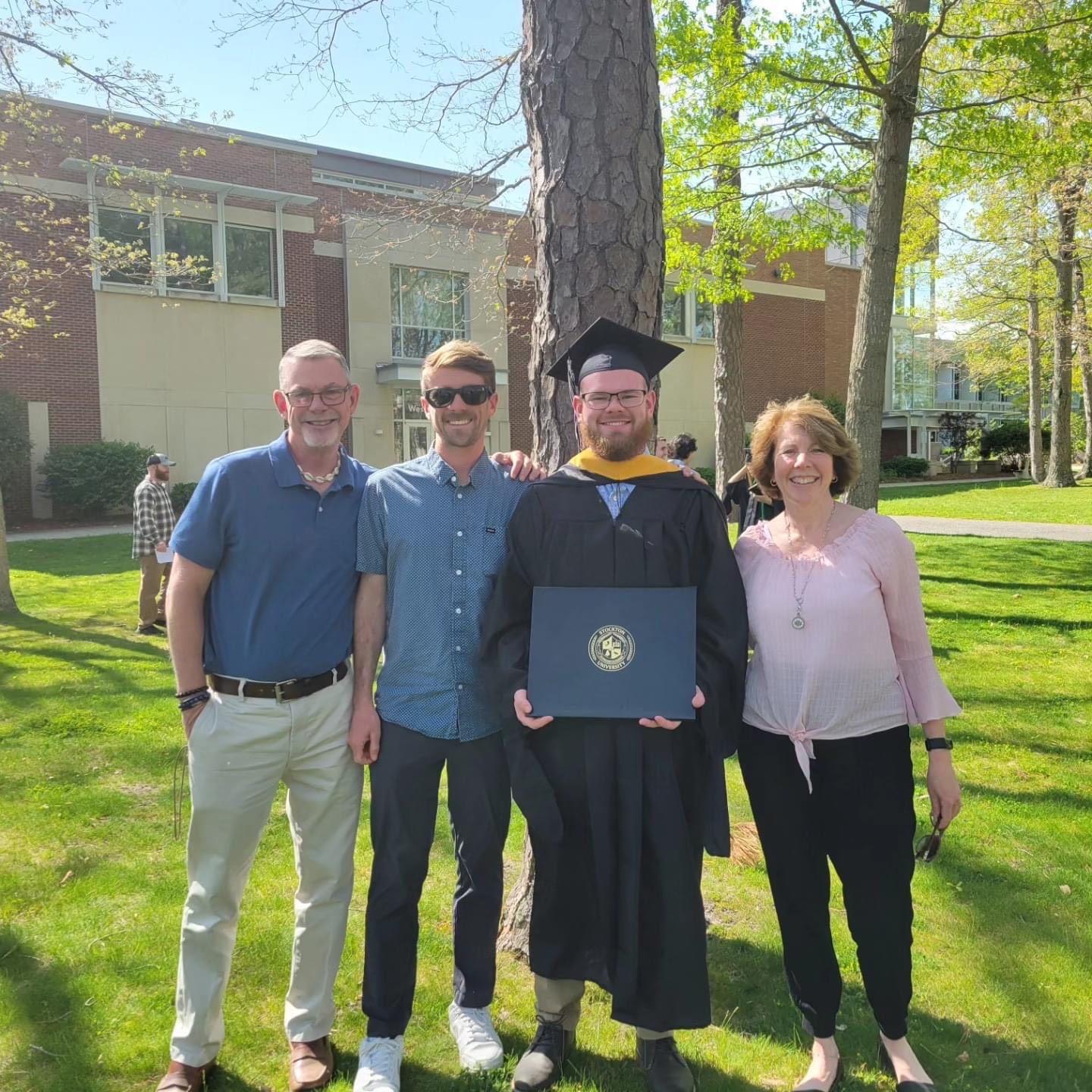
Today, Ethan has made it through the wilderness. He graduated with a Bachelor of Social Work, then quickly got his Master's. This allows him to take on more clients and even provide therapy. He works with a range of vulnerable people, who he often meets at their lowest point.
"We're helping people who are homeless and seeking housing, individuals with substance abuse issues, people looking to be reunited with their kids."
He takes pride in this work, even feels called to it. It's not hard to see why.
"I know what it's like to be in a place where you wonder when life will finally feel good. I know that pressure of wondering when you'll get there. Today, I'm travelling, taking road trips and doing things I never thought I'd do because of anxiety."
"In due time, it works out. But you need the patience and persistence to get through. Taking your time and waiting is a battle on its own. And for men with XXY, there isn't all this information, like 'do this and you'll feel better.' That's something we have to figure out and create for ourselves."