
Nobody's Victim: Tyler's Story
Nobody's Victim: Tyler's Story
By Nonjabulo Mlangeni
In the latest blog on our website, we profile Tyler Hand, a four-time combat veteran with XXY. In his own rowdy way, Tyler shares how he's made peace with his diagnosis, kept moving forward, and refused to be a victim.
Less Talk, More Action
Tyler Hand is a stoic. You hear it when he talks. I start our interview by asking about his childhood, and specifically how Klinefelter Syndrome played a part. We ask these questions because we want to understand not just symptoms and experiences, but their emotional impact on people's lives.
Tyler's not really having that, and a friendly tug of war begins. Ask about his feelings, and he'll tell you his thoughts. Ask for the details, and he'll give you the summary; the high-level overview of what, where, when, and how.
It's not a terrible thing, and it's not a thing that's hard to understand. Tyler is solution-oriented and doesn't wade into the feeling of it all. After all, he wasn't raised to dwell—he was raised to do. The world he was born into wasn't one of talk, but of action.
He grew up on a farm in Central Nebraska, working hard from a young age. There wasn't much room to wallow in problems. Instead, there were crops to tend to and animals to raise. Tasks and expectations.
There was also a sense of being detached from the rest of the world. His nearest neighbors were a ways away. Much of the time, it was just him, his family and the wide-open land. So he didn't always have access to the kind of help he needed. He learned early on that he had to power through.
As a child, Tyler had many of the learning challenges associated with XXY. Difficulty in school, struggles with both reading and retention. But it was the 80s, and schools didn't have the support they do today. And when he got home, his parents didn't know how to help either.
"My mom and dad didn't understand what was wrong," he says. "Later on, when I got the diagnosis, my mom said, 'how would I have ever known?'"
Tyler himself didn't know exactly what he was facing. The struggles at school, the struggle to control his thoughts. When you don't even have language for the problem, you don't know how to fix it. So he helped himself the best way he knew how: kept his hands busy so his mind wasn't working overtime.
"You spend a lot of time alone, and you do your best to not let your mind get the best of you. Mine's a tricky place, at least it can be. But usually, when I was alone, I was on the farm. I had the outdoors; I had other things to do to keep me busy."
Nobody's Victim
Tyler feels he turned out well despite these things, and nothing in his voice suggests an ounce of regret. He'd be the first to tell you that he's not a victim.
"A lot of things have to do with how you're raised," he says. "If you're raised well, that can help you do what you wanna do."
And "do" is the key word. It might even be the theme of his life story. There are people who get caught up in lofty ideas and people who focus on tangible things. In simpler terms, these are the thinkers and the doers. The doers tend to be more concerned about what's right in front of them. They focus on managing the immediate reality of their lives.
At every point in his life, Tyler has been a doer: seeing the problem and charging at the solution. At 17, he knew his life was stagnant, so he joined the reserves. At 18, he started basic training. To his surprise, it felt like coming home.
He was so well-suited for military life, where everything ran like a well-oiled machine. He flourished in all that structure and order. The doer in him liked knowing that if he took certain actions, there'd be a predictable result.
"Even if you're not a great soldier or not the best at your job, you can [still succeed] ... as long as you show up to work and do the right thing."
But it doesn't sound like he was bad at much. In the course of his career, Tyler was deployed four times on two continents. Like he did on his grandfather's farm, he worked with his hands, serving as a 63 Bravo mechanic.
Klinefelter's Diagnosis
Around age 30, Tyler and his second wife were looking to start a family. Though she already had children, she got checked to make sure nothing had changed. Tyler followed, seeing a urologist, and completing a range of tests.
"They did the [semen analysis] and said, 'you've got nothing.' And with the testosterone, they said it was on the level of a 75-year-old man."
His testosterone was just 81 at 30 years old. Once the doctors found out he had Klinefelter's, that revelation made a lot of sense to Tyler.
"They said your testosterone has been this low all your life, and I said, 'oh man, that explains a lot.'"
The couple wanted to push forward. They spoke to doctors about their options to conceive but learned their odds of having children were less than 1%.
"There might have been some disappointment for a little while," says Tyler. "But it's not something I can control, so there's no reason to be mad about it. You just adjust and keep living life. I said, 'okay, I'll just be a stepdad then, which is fine.'"
Turns out, it was more than that. Today, he's perfectly content with how things played out. To put it plainly, parenthood has no appeal to him now. He genuinely enjoys the freedom of not being a father, and how it's simplified his life.
After the military, he kept working as a mechanic and is now a manager at an auto shop. He's responsible for a handful of technicians who have children of their own. Tyler's the one with the bandwidth to work 70-hour weeks, and that's what he does.
"My tool bills are my kids," he says, chuckling. "'Cause they're expensive and I have to pay them every month."
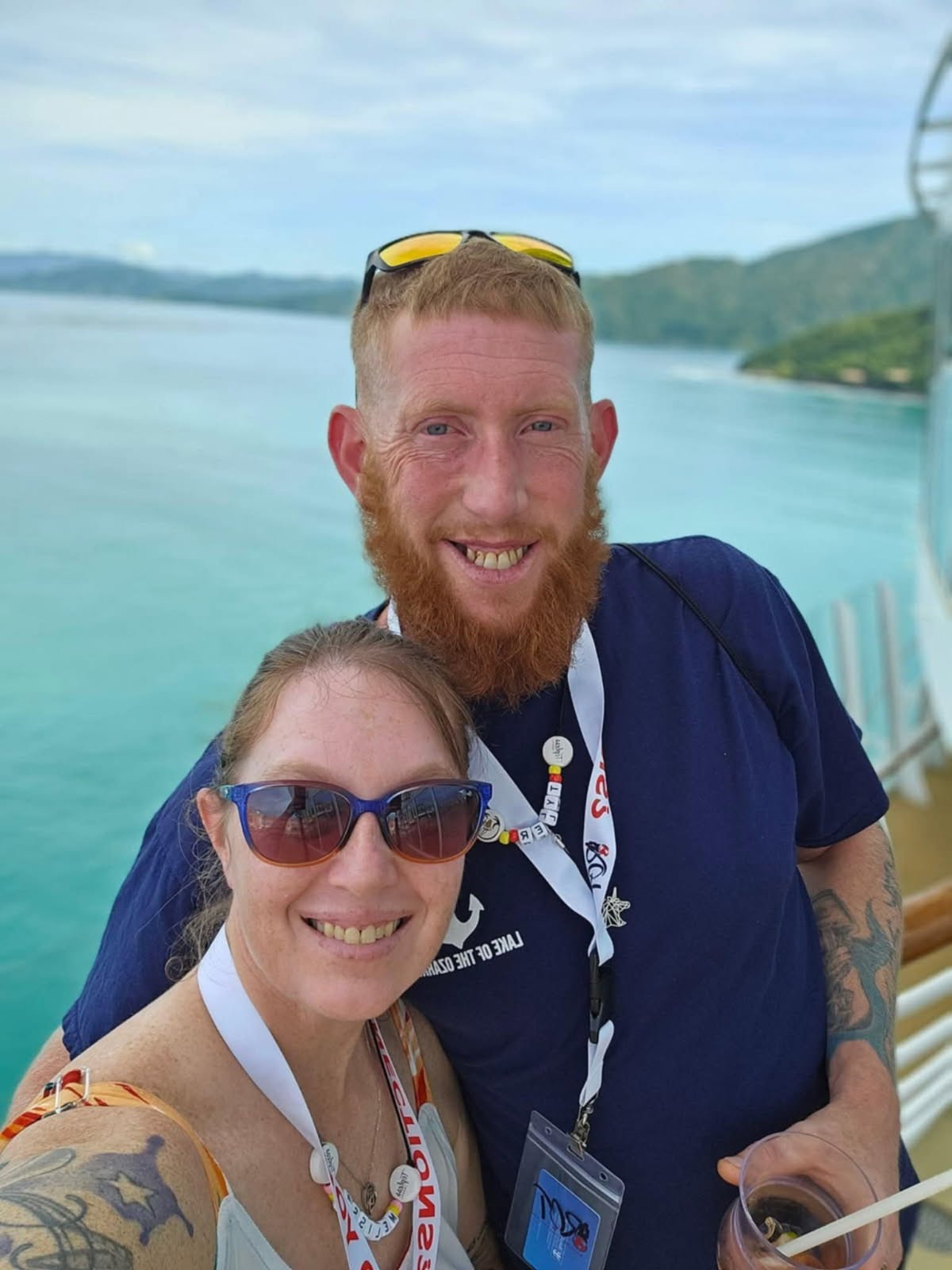
By the time work is through, he just wants to enjoy the fruit of his labor: doing as he pleases with his money and time. "Me and my wife go on vacation. I like to go on cruises; it's been great."
Peace and Quiet
Since starting testosterone replacement therapy (TRT), Tyler's seen two major benefits. One is mental clarity. For the longest time, it seemed that his mind was always racing, and always hyper-focused on women and sex. TRT helped quiet some of that noise.
"I thought about women way more than other people. I asked my friends, and they said, 'dude, we're thinking about nothing.' And I thought, wow, that would be awesome. I'd love to have that for a day. That doesn't happen, ever."
The testosterone also gave him a greater sense of self-control and evened out his emotions.
"I had a short temper and a lot of anger issues [before]," he says. "I'd lash out a lot. But now there's people [in my life] who've only seen me angry once or twice. They actually think it's weird that I never get upset. But there's other hormones in your body that the testosterone interacts with, so it helps [your emotions too]."
There was a time after the military when Tyler was taking Zoloft for depression. But to him, it felt like less of a life raft and more of a crutch. As always, he chose the white-knuckle approach instead.
"I said I'm gonna make this work my way, and that's the only way. I don't like when people try to feed you drugs to fix all your problems."
Words to the Wise
The major difference between Tyler's generation of men and the one coming up today is there's so much more room for comparison.
"When I was growing up, there were no video games. I didn't have a cell phone. Where I lived, there was only one person within like 5 miles that even had cable."
Though feeling different has never been a breeze, it's harder to embrace it when there's so much to compare yourself to. Everyone's lives are on display, and they often look better, simpler or easier than yours.
"You'd think it'd be easier for kids these days," says Tyler. "But social media makes it harder if you're different. You're getting attacked from a different angle than what I experienced when I was younger."
"But if you let everybody's opinions, society and social media affect your day-to-day life, you're gonna get the outcome that everybody else wants. But if you don't allow that to control you, you can get out what you put in."
Doing the Right Thing
I asked Tyler why he wanted to share his story. He started with general statements: "I'll talk to anybody" ... "life is an experiment," and so on. But his deeper motive is the same one that's led many of you to share your own journeys. You simply believe it's the right thing to do.
"There's always somebody that needs help with something," says Tyler. "The only stupid question is the one not asked."