
Pride and Joy: Sarah's Story
Pride and Joy: Sarah's Story
By Nonjabulo Mlangeni
In the latest blog on our website, we profile Sarah Musa, a mother of two whose youngest child has Klinefelter's. Sarah talks XXY diagnosis, meeting milestones, and how she stopped worrying what the future may bring.
Sarah Musa's first pregnancy took place during the height of the COVID-19 pandemic, making it impossible to celebrate the way she wanted to. So when her second pregnancy came, in 2024, she was eager to enjoy everything she'd missed out on.
With a gender reveal on the horizon, she went for noninvasive prenatal testing (NIPT), and returned to her everyday life—expecting nothing out of the ordinary.
"I was at work one day and got a missed call, plus a voicemail from a genetic counsellor," she says. "I instantly knew something was different, because I have an older child and I know they only call if they have [abnormal] results. You know it's something if they call and ask for a minute of your time. But when I called back, she was already gone for the day."
To make matters worse, it was a Friday afternoon, meaning Sarah would have to wait a few days at least. She spent the weekend with a sense of dread, imagining worst-case scenarios.
"I was so anxious ... There were a lot of tears, especially because I didn't know exactly what it was; I just knew it was something."
She was grateful for her boyfriend's positivity, which helped to comfort and calm her. Still, she knew in her heart that this pregnancy was different, though she wouldn't call it a mother's intuition.
"It was probably helpful to have at least one of us not worrying so much. He was definitely optimistic and hopeful, but I felt in my gut that something was wrong after getting that call."
Though it took forever for Monday to come, it wasn't a day of devastation. The Klinefelter's diagnosis was jarring, but it was shared in a thoughtful and compassionate way. This kept Sarah from feeling overwhelmed or discouraged.
"The woman who gave me the information is amazing, and that job is meant for her," says Sarah. "She actually asked me if she could reveal the gender first. I quickly said yes, because I just wanted to know what was happening with my baby. Then she told me he had Klinefelter Syndrome but quickly let me know it doesn't affect his life expectancy, and his appearance would also be normal."
It was only after establishing that his quality of life would be fine that the doctor launched into the other things. Sarah heard he was likely to be tall, and highly likely to be infertile. She learned that she probably wouldn't notice anything different in his childhood, but that he may develop breast tissue or wider hips as he got older.
Unlike most parents, she was even warned ahead of time that an internet search would show her the most extreme cases. To this day, she gets a little emotional when she remembers how that conversation actually brought out the best in her.
"She was very sensitive to the topic. She asked me if I was okay and told me to reach back out if I needed anything. Just really helpful, and I honestly think that, if I didn't have someone who made it such a positive experience, I would've had concerns, like 'am I giving this baby the best life?'"
Though Sarah was asked if she wanted an abortion, she's glad that their first priority was to ensure she was thoroughly informed. Everything else was secondary.
"I was asked if I want to terminate the pregnancy, but my takeaway was: this doesn't change the quality of his life, it doesn't change much of his appearance. It doesn't really change anything, so why would I not want my baby? But I think it's hospital protocol that they do have to ask that."
Still, she'd made her mind up before she got the news. Even if the conversation hadn't gone as well as it did, the outcome would have been the same.
"We'd already decided that we want this child, and that it didn't matter what's different about him. But I fear for people that don't have that outlook, because ultimately, you could love and want your baby and [end up] terminating a baby that has nothing wrong ... I know it's a tough decision to make. But, to me, if they hadn't told us that he has Klinefelter's, we wouldn't have known, because there's nothing so unique about him."
Meeting Milestones
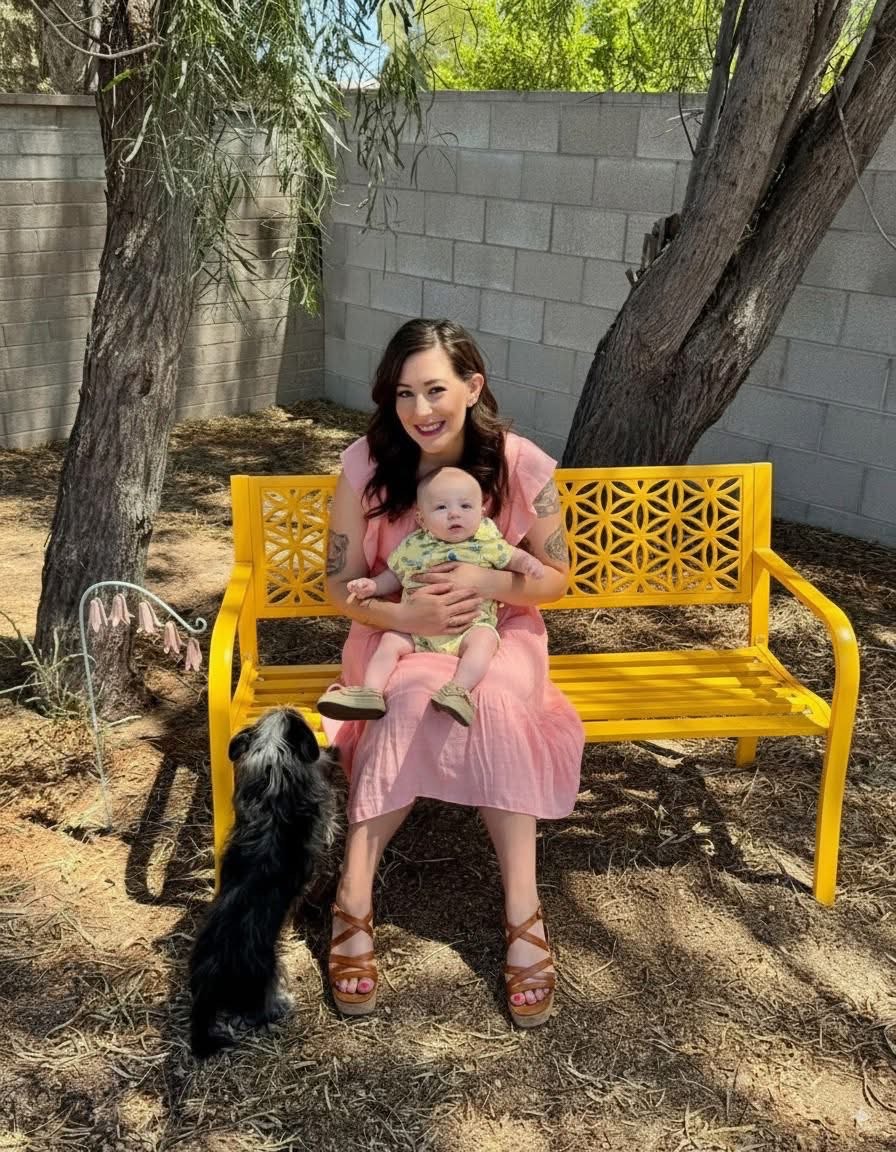
Today, baby Emmett is 7 months old and thriving. Being a former childcare professional, Sarah was well prepared to notice any delays fairly quickly. But, so far, the only issue he's faced is hypotonia, or low muscle tone.
"There was a time when I noticed that his reaching was different. It was still what I'd call newborn reaching. When I picked him up, he'd reach upward instead of having a stance on his arms. I mentioned it to the pediatrician, and she referred us to a physical therapist who agreed with me, so he's in therapy now."
They've noticed that much of the muscle tone weakness is in his abs and lower back. Still, Sarah isn't quick to pin it on Klinefelter's.
Having spent so much time around infants, she's seen plenty who couldn't roll over or sit up at Emmett's age. Some couldn't possibly have XXY because they were female. Others were just boys without the diagnosis, who were developing at their own pace.
Calming the Storm
"I was at an appointment with a pediatrician, and he said, 'lots of babies aren't walking at 18 months. Do they all have Klinefelter's? There's babies that need speech therapy, and they don't all have it either. It's just a probability that Emmett could be slower to hit milestones, but it's not always because of that.' That helped me to place XXY as a secondary thing. Like, he's just Emmett, and he may or may not experience these symptoms."
Sarah knows firsthand how easy it is to fixate on a label, a diagnosis or a term, and she encourages other parents to be cautious of that. All those what ifs and maybes can become a kind of quicksand: the more you wrestle, the more they seem to swallow you whole.
"I feel like there's sometimes this fixation on 'well, he's XXY.' But the reality is many people deal with mental health issues and lots of kids have ADHD or autism as they get older; it's not all because of Klinefelter's. So although this diagnosis is helpful to know, it's not [entirely] to blame for [someone's] quality of life."
Even when it comes to fertility, Sarah tries to be pragmatic. Her perspective is that she has no idea who Emmett will grow up to be. For all she knows, he might not even want to be a parent, making fertility a non-issue for him. It's also possible that, by the time he's of age, science will have advanced enough to find a solution.
"It was crazy to be told that the baby growing inside of me might not be able to have children," she says. "To be able to tell me something like that, science has come really far, and I'm grateful for it. But I don't know what his life will be like, since that's his choice to make when he's older, and I try not to dwell."
To Be Continued
Though Sarah's not sure when they'll officially share the diagnosis with Emmett, they're already collecting helpful, age-appropriate resources. One is X-tra Special Me by Pam Winters, a sweet rhyme book that tackles the topic in a toddler-friendly way.
"The author's a mom whose child has Klinefelter's, and it's a very easy read. It has pictures of her son in it, and is helpful for anyone who's never heard of it and wants information."
Since Emmett's still so young, there's only so much Sarah can share. But the journey has been a joy so far. He's an easygoing baby with a cheerful disposition. She jokes that she could hand him to a stranger, and he'd be perfectly fine. The physical therapy is going well, and he's just recently started clapping his hands—about a month before most kids usually do.
As we wrap up the interview, I ask for photos, as always. And, as always, I issue the disclaimer that there's no pressure to share pictures of her child.
"Some parents may just want to share pictures of themselves, and that's okay too," I say.
"No, I definitely want him on there," says Sarah. "We're loud and proud when it comes to him."