
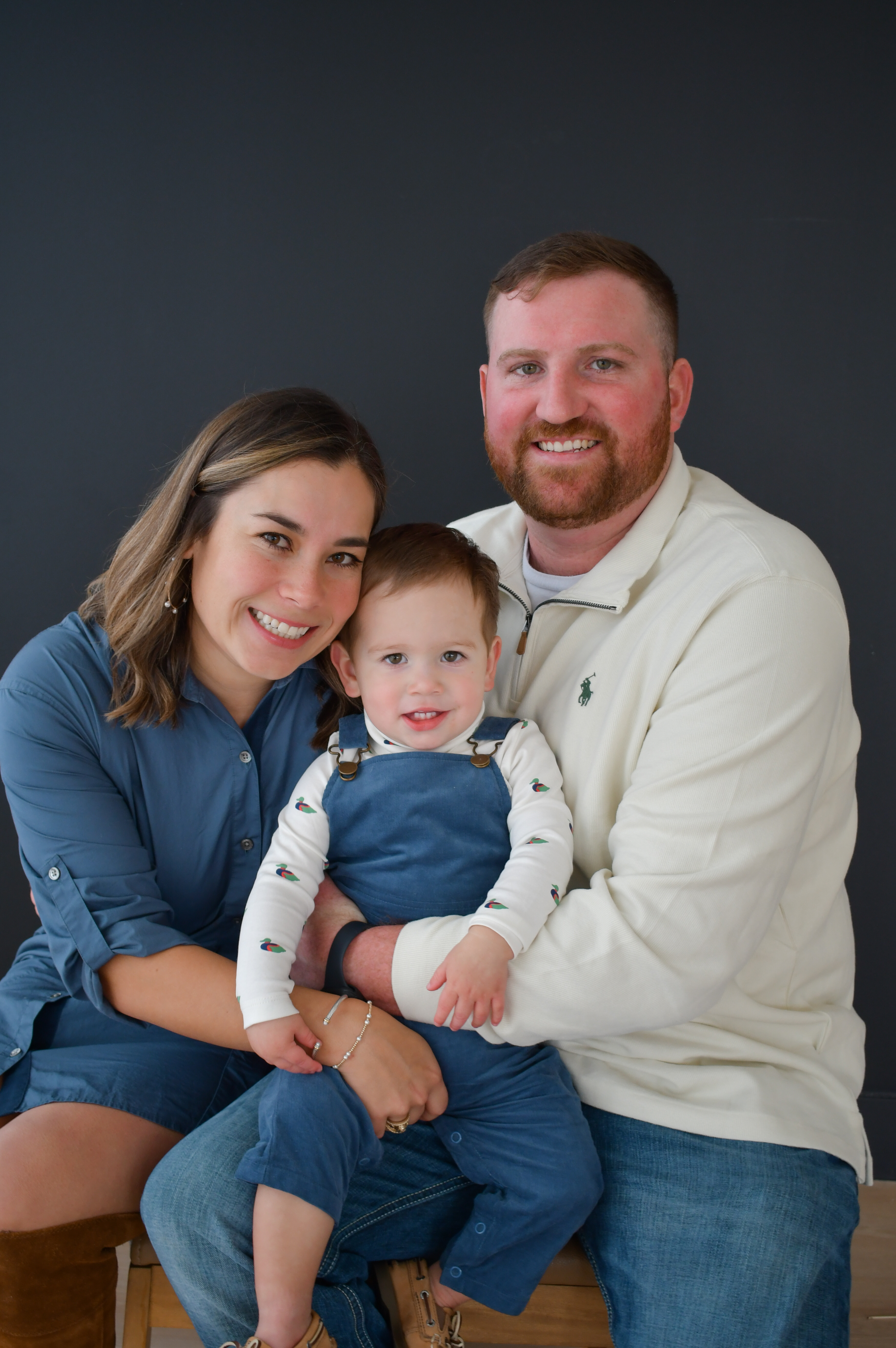
The Greater Good: Seth and Lindsey's Story
The Greater Good: Seth and Lindsey's Story
By Nonjabulo Mlangeni
In the latest blog on our website, we profile Lindsey and Seth Oliver, whose son has XXY. The couple shares their journey to diagnosis, what they've learned so far and why they refuse to stay silent.
In late 2022, Lindsey and Seth Oliver were expecting their first child. They did noninvasive prenatal testing (NIPT), expecting it to reveal the baby's gender and check for familiar complications like Down's. Klinefelter Syndrome wasn't even on their radar.
"But I knew something wasn't right when the doctor called us instead of the nurse," says Lindsey. "He said the test came back positive for XXY, and we had no idea what that meant. I said 'okay, what is that?' He goes, 'well, you're having a boy...' So that's how we found out the gender."
The doctor had very little information, so they'd have to see a genetic counsellor to learn more. The couple ultimately waited several weeks for that appointment. In the meantime, they scoured the internet for answers.
"The worst of the worst came up," Lindsey recalls. "So we panicked, and we had to sit in that for a long time while we waited to speak to someone with more information."
What they saw painted such a narrow and extreme picture that they feared their child would have major disabilities. Being a baseball coach, Seth wondered if his son would be able to play sports or enjoy the outdoors—everyday things that he'd assumed they could do together.
Being a teacher, Lindsey worried about severe learning challenges that could hamper his future. "We were just concerned about whether he'd have a normal life."
Things took a positive turn once they got a second opinion, though not through the traditional healthcare system. Using their social networks, they connected with doctors and asked questions. One was a family friend who explained that, of all the things that could go wrong, Klinefelter's is one of the most manageable. They met another physician through an online support group, and she gave them a broader view of the diagnosis.
"She told us some of the positives," says Lindsey. "Like, he's gonna be tall—especially since my husband's so tall—and he's gonna be really cute ... just giving us more than 'this is what's gonna be wrong with him.'"
When they finally saw a genetic specialist, he explained that XXY is on a spectrum and varies in severity, similar to autism. "They said the severity would depend on how many Xs he had," says Lindsey. "So we were just praying for the low end of the spectrum, and he does have 47 chromosomes, so we are blessed for that."
Knowing for Sure
Though they'd been told the NIPT is highly accurate, the couple wanted an absolute answer.
"They said there's a 99% chance he has XXY, but there's still that 1%," says Seth. "They could also do a blood test once he was born, but we thought 'let's just get it done now.' I think it was because the suspense part [was so hard], so we just wanted to know for sure."
Once those results came, they hit the ground running. The mental energy they'd spent worrying about the unknown now had a productive outlet. They focused on doing everything they could to create a supportive environment: lining up the appointments and resources they might need in those first few months.
"From that point, we said 'okay, this is for sure; let's make a plan," says Lindsey. "The genetic counselor helped us get an endocrinologist during the pregnancy, so we'd have somewhere to go as soon as he was born. That was very helpful because some people have to wait 6-8 months just to get in to see a doctor, so you can miss out [on precious time]."
Meeting Milestones
Having found an endocrinologist so early, the couple managed to get baby Nolan on infant testosterone therapy from 3 to 6 months. They were firm about wanting a pediatrician that would cooperate and met theirs beforehand to explain the situation.
"We wouldn't continue with them if they weren't on board," says Lindsey. "But she said they'd do the testosterone shots if we want to, so she's been a great help as well."
Today Nolan is two and living his best toddler life. He's had no developmental delays, not even a speech issue. Unfortunately, there's been one major health complication, though it's not clear if it's related to Klinefelter Syndrome.
The Olivers discovered that he had a small hole in his heart, and he just recently had surgery to correct it.
"He had open heart surgery in June," says Seth. "We saw a genetic cardiologist for that, and they said it's a 50/50 chance of it being Klinefelter's-related or just a fluke. They don't have enough research to say for sure."
Lindsey adds that the specialists don't see enough XXY kids to have enough information to definitively say that it can cause this kind of outcome. "So we don't want to assume it's because of Klinefelter's, because we don't know."
Lessons In Resilience
Thankfully, Nolan had a seamless recovery and was back on hands and feet in a matter of days.
"This is one of the more common heart defects to have," says Seth. "So, door-to-door, [the process] was like 77 hours."
"He was crawling on the floor by day four," says Lindsey. "They really are very resilient."
It's no wonder where he got it from. His parents are the picture of resilience, looking nothing like what they've been through. They are refreshingly sweet, even giggly, on the call—enjoying the simple pleasures of life after the storm. If you didn't know their story, you'd never be able to tell.
"After going through the heart thing, the Klinefelter's looks so minor," says Lindsey. "As a teacher, I see kiddos with serious medical stuff in their Skywards, to the point that I wonder if I would even want to put XXY in there? I don't want that to represent him, because he's just like the other kids."
A few days before the interview, Nolan was cleared by a genetic cardiologist. He'll go back for a check-up next summer, but everything looks good so far.
Though they're normally very private, the Olivers wanted to shed light on this topic that's often misunderstood. As people of faith, they also felt a responsibility to use their story for a greater good.
"Instead of just not doing anything about it, we're sharing our experience with others," says Seth. "Lots of people don't know what Klinefelter's is until they're trying to have kids, yet it's actually more common than you think."