
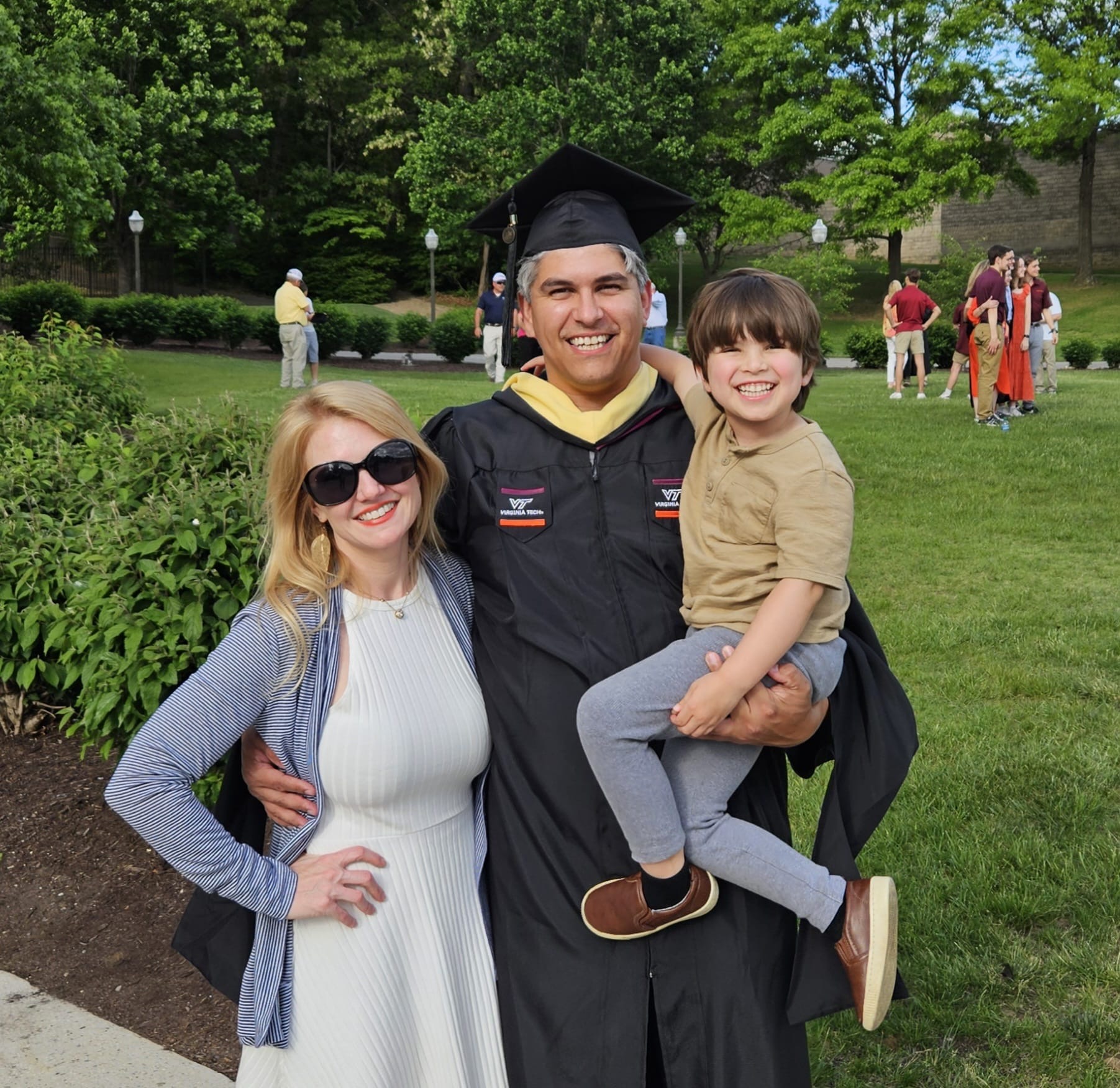
The Whole Truth: Kimberly's Story
The Whole Truth: Kimberly's Story
By Nonjabulo Mlangeni
In 2019, Kimberly Beall was pregnant with her third child and waiting for her noninvasive prenatal testing (NIPT) results. But when her OBGYN called, he asked that she meet him in person instead of talking over the phone.
She immediately began bracing herself for some kind of blow. Anxious and unsure what to expect, she brought her mom along for moral support. It was during that meeting that she learned her son had Klinefelter Syndrome, though she didn't get much of an explanation.
"He [said] it's an extra chromosome, but it seemed like he just did a cursory Google search before he entered the room."
So, she listened as he ran through a list of possible outcomes. Some were innocuous ("overweight ... likely to be tall") and many were jarring ("low intelligence ... autism and ADHD are common"). None offered the slightest glimmer of hope.
Today, we know that kids with XXY can demonstrate a range of traits that add value to the world—from kind or affectionate temperaments to creative talents to gifts in science, technology and math. But like many moms-to-be, Kimberly only heard one side of the story.
And so she panicked. As a counsellor and former teacher, she's helped many people with severe disabilities. That was the lens she processed the news through. She immediately feared that her child wouldn't grow up to be independent or enjoy decent quality of life.
"He really didn't have anything rosy to say about it. So [I thought] is this what it's going to be like? Are we just going to have this overgrown child who doesn't live a normal life? I looked at him like, 'if this is going to be very bad, [then] what do I do about it?'"
Kimberly's reaction was also shaped by her doctor's non-verbal cues. In trying to show sympathy, medical staff sometimes take on a somber demeanor when they deliver the news. Since their tone and body language suggest that something terrible is happening, that's the message that some parents internalize.
"It honestly sent me into an emotional tailspin," says Kimberly. "Because he was breaking the news to me with this sad look on face ... I ended up pretty devastated, talking to my mom and saying, 'should we consider abortion?'"
Kimberly cried all the way home. But once she arrived, she armed herself with information. "It took half an hour of research to find Ryan and Living With XXY, which quickly turned things around for me."
Those were the early days when the site didn't have the wealth of information it does today. Still, the little she saw gave her reason to believe there was more to the story.
"[Ryan] was just starting out, so it was still mostly just his experience ... But he talked about growing up very normally. He was this good-looking guy who seemed intelligent, and I thought, if my child has the hope of being like that, I'm okay."
She talked things through with her husband, Fernando, and they chose to be stubbornly joyful.
"We decided we were going to be excited whether or not they had Klinefelter's. We said 'they're going to be okay,' and we had peace."
The Whole Truth
Some weeks later, the couple met a genetic counsellor who informed them that the NIPT isn't 100% accurate. She suggested there may be just a 30% chance their son had XXY. Today, Kimberly suspects that this was false hope.
"I feel that was a mis-sell to try to get people not to abort," she says. "Instead of [plainly] saying, 'Klinefelter's is actually not terrible. It's not the end of the world, and your kid's going to be great,'" which is what Kimberly herself tells people today.
Though this may seem like splitting hairs, one can understand how parents become sticklers for clarity. The news of a diagnosis unlocks oceans of responsibility. So many things to do, know and consider. In the early days, it feels like working through a sand dune with a sieve.
Then there's the added task of filtering out half-truths and janky facts. Parents who aren't used to processing that kind of data can easily become discouraged or misled.
Kimberly remembers joining one XXY support group that shared research linking Klinefelter's to criminality. Because she and Fernando are academic, they know there are many ways to interpret data. But she worries about those who take information at face value because they simply don't know any better.
"It was a study out of Europe," she recalls. "And they found a high population of people with Klinefelter Syndrome in prisons."
Many people would take that and run with it—all the way to a problematic conclusion. Yet, the findings of a study done in prison can't just be applied to the general human population. Beyond that, all kinds of factors may have shaped those results. When we don't tell the whole truth, it has a real impact on real lives.
"Instead of suggesting that these people are just criminals, it could suggest that they're highly susceptible to the influence of others ... it could even be that they lack confidence," says Kimberly. "There are so many other factors to consider, instead of just sharing statistics that scare people."
Joining A Research Study
Shortly after their son Anderson's birth, the couple was asked if he could join a scientific trial. The study is run by Nemours Children's Hospital in Delaware, who found the family through their relationship with the hospital Anderson was born in.
Through the trial, he gets highly personalized care from specialists, while helping to expand XXY research. "We've been part of it since he was three months old; they do what they call baby or infant puberty," Kimberly explains.
"They say lots of kids benefit from very, very low injections of testosterone once per month, from about 3 to 6 months. So, Anderson received it for those three months."
Beyond early testosterone therapy, boys in the study see a team of experts who regularly assess their growth and development. Parents in general have access to the study's findings as they're released, and parents of participating kids get far more resources and support than they would normally see in regular healthcare systems.
It's first-rate care at no cost, and the family is grateful to have it.
"Typically, when you're seeing these different specialists, it's all very dispersed," says Kimberly. "But here, we get a big binder after each check-up, with the latest on Anderson's development."
Fernando praises the intentionality of the researchers, who also keep parents informed of the latest XXY research and trends. "They even do assessments of us [parents] ... how we grew up, etc., so we can see our own strengths and weaknesses."
Meeting Milestones
As the study receives more funding, it's extended its lifespan. Anderson's group is likely to participate until the boys are about 10 years old. So far, Anderson's had multiple consultations with therapists, who've found no developmental delays.
Now five years old, he's just started full-day preschool, which has helped with his writing. Beyond that, he's highly engaged with peers and gets great feedback on his social development.
His parents note that he has high emotional intelligence and is very attentive to those around him. Because of this, he easily observes non-verbal cues. He often plays with the girls at school, because the boys play fast and rough and he doesn't have the same aggression.
His teacher does report some issues with attention and compliance, although there's no hyperactive or disruptive behavior. Because of this, Kimberly anticipates that they might deal with attention deficit disorder down the line.
Still, she's careful to remember that some things are more of a personality quirk than a problem. For instance, there were some delays in potty-training, but she knew it was mostly him being stubborn and not wanting to try.
"He's very self-assured and does what he wants," she says. "So, it's not always [that he can't do things] but that he thinks everything is optional."
Lessons That'll Save You
As a counsellor and a mother, Kimberly has both psychology expertise and lived experience. She drew on that valuable combination to share some wisdom that can help parents and families thrive.
The first tip is to think critically about your kid's strengths. This starts with seeing them as an individual, not just an extension of yourself. By reminding yourself that they are their own person, you can avoid projecting unreasonable expectations onto them or nudging them into roles that don't fit.
Kimberly notes that many families have established narratives about what "kind of family" they are. Yet those unwritten rules may not apply to everyone.
"Your child may be an introvert and may not want to hug people who come into the house," she notes as an example. "He has his own mind; meet them where they are instead of trying to make them fit the mold."
Fernando encourages parents to take a strengths-based perspective, instead of falling into the trap of "always looking out for deficits." But even when you discover those strengths, know that your kid might not embrace that path.
Instead of pushing them into something you know they'd be great at, you can present them with a range of opportunities and experiences. This can help them find that sweet spot where talent and passion overlap.
When it comes to physical activity, Kimberly encourages parents to think outside the box. A child might not enjoy the competitive culture of group sports, but there are other ways to get them active and help them challenge themselves.
"We figured out that he's better at individual sports. He's not a group sport kid, so he likes swimming right now," she says. The family also loves hiking together. That's how they discovered that Anderson enjoys overcoming obstacles and will focus on tasks a little longer when they incorporate that.
Beyond that, they let him know that it's okay not to be good at everything, so that he has healthy and realistic expectations.
"He once told me, '[other kids] are better than me at that," says Kimberly. "And I can't remember exactly what it was, but I told him it's okay that they're better. I didn't dismiss it. I just reassure him because they can sense when you're being inauthentic in those moments. They're like, 'my parents aren't being honest, they're saying I'm good at everything.'"
This point is especially important, because many parents become overprotective of children with some kind of difference. But, if you're constantly treating a child like they're fragile, you can unintentionally make them feel more isolated.
That's why the couple is cautious about labels and the impressions they can create. "We don't raise him based on a diagnosis or raise him differently than the other kids," says Kimberly. "We don't push the narrative that having XXY makes him the underdog."